
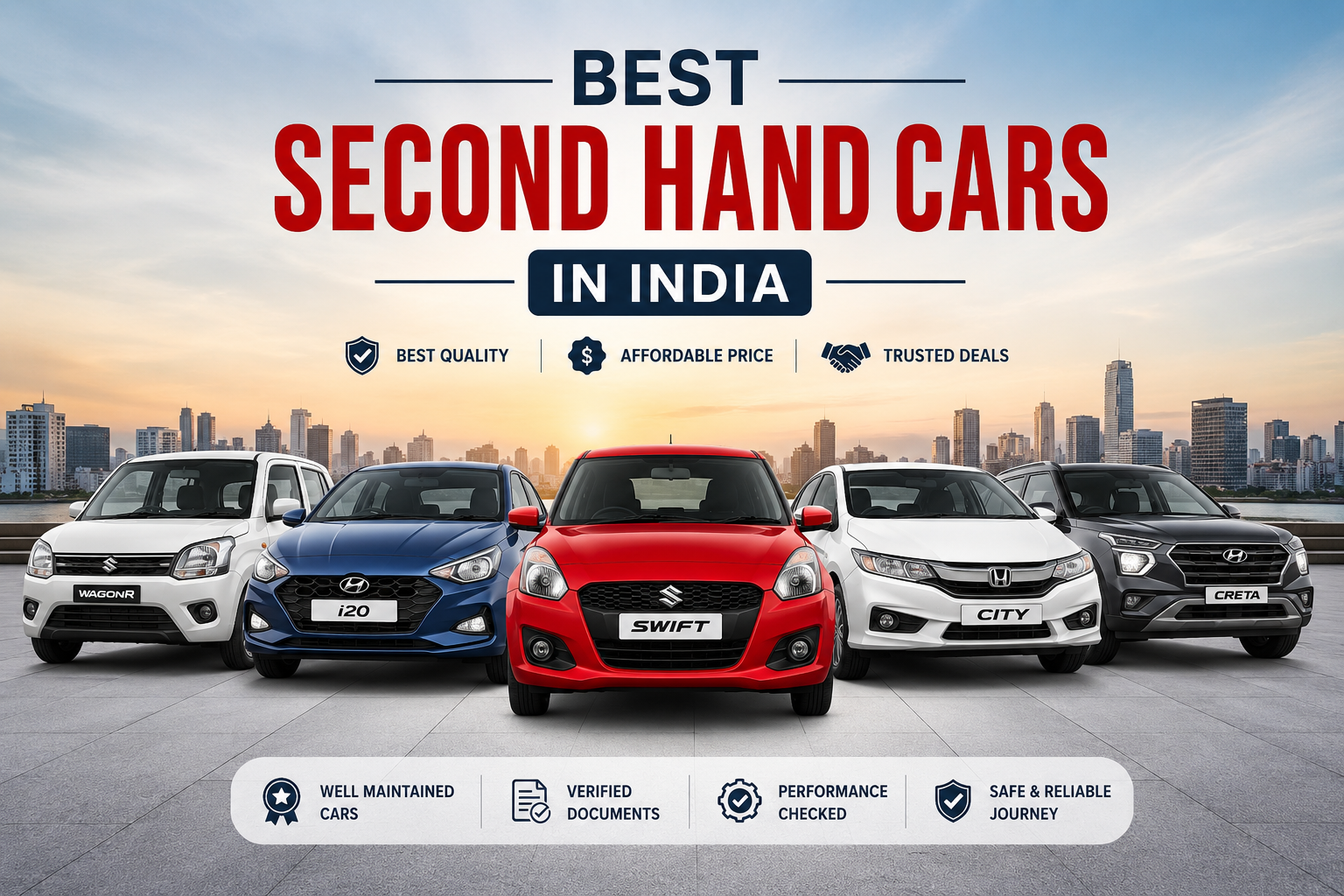
Buying a car is amongst the most significant financial decisions for an Indian household — and with the prices of new cars going up every year, there is a growing number of buyers in the used car market. Indeed, India’s organized used car sector is expanding faster than the new car market due to improved financing options, verified inspection platforms and a larger range of well-maintained vehicles for varying budgets. However, the task to find the best second hand cars in India does not really boil down to just selecting on popularity — it is about which cars hold their value well, which ones are inexpensive to maintain, and which ones have hidden risks. From the best used cars in a range of budgets to a step-by-step buying checklist and the documentation you need to check to clear some of the most common buyer queries, this guide takes you through everything. Even if you’re a first-time buyer in the market for an affordable hatchback, or a premium SUV for half the on-road price, this guide will enable you to make an assured, well-informed purchase.
Why Buy a Second Hand Car in India?
Before we get to the list, let’s get a brief understanding of why buying a used car in the Indian market today is such a great deal.
- Huge Depreciation Savings — A brand-new vehicle loses 15 to 20 percent of its value as soon as it’s driven off the lot and 40 to 50 percent within three years of purchase. Purchasing a car that’s 2-3 years old allows you to avoid the steepest depreciation curve.
- No Waiting Period — There are usually several months’ wait for the hot new car models. Pre-owned cars are good to go for drive home this week.
- More Car for Your Money — For the same money, you can buy a higher variant, or a bigger segment, or even a luxury brand in the used market as compared to new.
- Greater Selection — The used market offers you access to obsolete models and old versions of vehicles with features that may have been removed in newer editions, so you can get your hands on options that are no longer available in physical showrooms.
- Cheaper To Insure And Register — Running cost is low — insurance premium and road tax are generally calculated on depreciated value.
Best Second Hand Cars in India by Budget
Best Second Hand Cars Under ₹5 Lakh
This category is suitable for first-time buyers and students or those in need of a sturdy daily driver.
Maruti Suzuki Swift — The Swift continues to be one of the most reliable hatchbacks in the second hand market because of its punchy engine, low maintenance cost & best resale value. Spare parts are being sold all over the place, even in small towns.
Maruti Suzuki Wagon R – Tall-boy design, spacious cabin and good fuel efficiency make the Wagon R a city and family favourite.
Hyundai Grand i10 Nios – Comes with a more premium interior and equipped better than most cars within this price range, making it an impressive pick for buyers who seek comfort.
Tata Tiago – Features a 4-star Global NCAP safety rating (in most variants), robust build quality, and great mileage – an ideal choice for buyers prioritizing safety.
Hyundai Santro / Maruti Alto – These two are the best-selling cars in India and are a great combo for the bottom of your car buying list.
Best Used Cars In ₹5-10 Lakh
This is the sweet spot for families needing a little more space, features and safety.
Best Second Hand Cars Between ₹5-10 Lakh
Hyundai i20 — Packed with features, comfortable, refined and one of the favorites if you want a premium hatchback.
Honda Amaze — A rear wheel drive compact sedan that has been standard for reliability and for having a spacious boot, best suited for small families and first time car owners.
Maruti Suzuki Baleno — Offers generous space and comfort along with Maruti’s dependable sales and after sales network, so it’s not much of a gamble for used car buyers.
Volkswagen Polo — For motoring enthusiasts, the Polo delivers a level of build and handling sharpness that is rare in this segment, though it has been discontinued in India.
Honda City — Among the most favorite sedans in India even in used market with roomy interior and good performance; diesel variant is best known for fuel efficiency.
Best Second Hand SUVs Under ₹15 Lakh
SUVs rule India’s new car sales, and the used SUV market has expanded equally rapidly.
- Tata Nexon — Is the top choice for subcompact SUV buyers owing to its strong safety rating, muscular styling, and ride comfort.
- Hyundai Creta — Always among the best selling used cars in India; feature-packed strong resale value, and a comfortable cabin for family.
- Kia Seltos — Features a sportier grille design and feature laden interior, targeting younger buyers looking for a premium automobile.
- Mahindra XUV300 — A Punchy Turbo-Petrol Engine and Solid Build, Best for performance-oriented buyers.
- Maruti Suzuki Brezza The good old reliable car that is easy on the pocket and maintenance and also supported by Maruti’s vast service network across India.
Best Second Hand Luxury Cars in India
For those buyers looking for a luxury ownership experience without the luxury price tag, the segment for used luxury has never been better.
Mercedes-Benz C-Class / E-Class — Their timeless looks and smooth ride make these sedans very desirable in the used car market.
BMW 3 Series / 5 Series — Revered for driving dynamics and their chichi cabins, these continue to be fan favorites.
Audi A4 / Q3 — Deliver a sports car, tech-forward experience for a fraction of the original cost.
Toyota Fortuner — It may not be considered as a luxury vehicle, but its commanding road presence, reliability and solid resale value does make it one of the most sought after used SUVs in India when it comes to pricing tiers.
Because luxury cars have more expensive upkeep, you should always have a complete inspection performed at a dealer service center before your purchase — it’s even more important here than it is with mass-market manufacturers.
Complete Second Hand Car Buying Checklist
- Set a Realistic Budget Consider not only the cost of the car but also coverage, RC processing fees, potential repairs, and any outstanding loans on the seller’s vehicle.
- Research the Right Model Pick two or three models that meet your needs (space, mileage, features) and budget and stick to those before you start test driving. It lets you focus your search and get a better read on prices.
- Verify the Car’s History Look for records of accidents, flooding or major repairs. Numerous reputable services now provide vehicle history reports that alert users to previous insurance claims or odometer fraud.
4. Inspect the Car Thoroughly
- Look for the unevenness of the gaps between body panels and mismatched paint colors, which may be signs of accident repair.
- Inspect underneath the vehicle for rust, oil leaks or fluid stains.
- Observe the patterns of wear on the tyres – uneven wear can be a sign of an alignment or suspension problem.
- Start the engine when cold and listen for any unusual noises.
- Test the AC, power windows, music system, and all electronic equipment.
- Drive It Always whether buying new or used. Never forego this crucial step. Take the car for a spin in both city traffic and, if you can, on a stretch of highway to test for vibrations, the way the brakes feel and how the steering feels.
- Have a Professional Look at It An independent car inspection service (or your own mechanic) can identify problems that may have eluded a normal test drive, including engine wear or hidden accident damage.
- Check All the Papers This step stands as by far the most important step and should have its own section below.
- Negotiate With Facts Consider the car’s age, condition, miles run and market resale value (not merely the seller’s asking price) in your negotiations.
Essential Documents to Check Before Buying a Used Car
Not verifying the paperwork is the most common and costly error made by used car buyers in India. Always confirm:
Registration Certificate (RC) — Make sure to check the original and verify the engine and chassis number with that of the vehicle.
Insurance Papers — Verify the status of its insurance — lapsed, comprehensive, third-party, etc.
Pollution Under Control (PUC) Certificate — It should be valid and not received.
Road Tax Receipt — This is most vital for outstation, as road tax regulations are state-specific.
No Objection Certificate (NOC) — Important if you are buying a car which is registered in another state.
Loan Closure/NOC from Bank — In case the seller has taken a loan to buy the car, ensure the loan is closed and there exists a clear NOC from the financing bank.
Service History — You want to see service records to gauge how well the car was maintained.
Duplicate Key & Owner’s Manual — Not a requirement, but can’t hurt to have.
Petrol vs Diesel vs CNG: Which Used Car Fuel Type Should You Choose?
- Petrol: Most suitable for low mileage (up to 10,000 km/yr) and has the lowest initial maintenance costs. Good for city driving.
- Diesel: This fuel is more appropriate for high-mileage drivers or those who often drive long distances, but it does come with a higher maintenance price tag.
- CNG — Best option for the buyers who are running cost conscious as well as for those who use the car as daily commuter in metro cities (with good CNG availability).
Do verify the registration date of the vehicle too with the emission norms of your city (like the age restrictions on diesel vehicles in Delhi-NCR) before you make a purchase.
Common Mistakes to Avoid When Buying a Used Car
- Hurrying the decision — Becoming emotionally attached to the first car you like too much will have you omitting important checks.
- Ignoring the odometer reading — Cross Reference with service record to identify inconsistencies.
- Not checking the insurance claim history — A car that’s had multiple claims may have hidden structural problems or other damage.
- Skipping a mechanic’s inspection — Few thousands spent on inspection can save you lakhs in future repairs.
- Not confirming the seller’s identity — Always cross-check the seller’s ID with the name of the registered owner in the RC.
Frequently Asked Questions
Q1. Would belong the answer to the best used car to buy for under 5 lakh in India?
In this budget, Maruti Suzuki Swift, Wagon R, Tata Tiago etc are the most reliable and easy to maintain cars due to high resale value and availability of service network.
Q2: Can we Buy Used Car in India?
yes,check the papers,hav an expert mechanical inspection and buy from a well known site or seller certified Opportunity is safe for buying. Certified pre-owned used car programs offer an additional level of security, because of the quality checks and warranties.
Q.3 what is the best age for a used car to buy?
Cars 2-5 years old generally provide the best balance — they have taken the brunt of depreciation but still have a useful life left and are often covered under extended warranty options.
Q4. What should I reserve for the RC transfer and other fees?
Charges of RC transfer differs from state to state but ever it is a few thousand rupees. Keep that in mind along with the insurance renewal and any service bills that are pending.
Q5. Petrol or diesel: is it worth buying a used car?
Petrol is more economical if you travel less than 10,000km a year. The fuel economy still beats petrol for high mileages or long distance runs, even with the higher running costs.
Conclusion
In 2026, the Indian used car industry has more options, greater clarity, and even more protection for the buyers. Whether you are looking at a budget Maruti Swift, a family hatchback Hyundai Creta, or a premium Mercedes-Benz C-Class, the secret of a good buy is always the same – research, inspection, and document verification.
Go slowly, get multiple opinions, have the car inspected by a professional and don’t be afraid to walk from a deal that just doesn’t feel right. With the right strategy, a used car can deliver you far more performance, features and comfort than a new car would at the same price.