
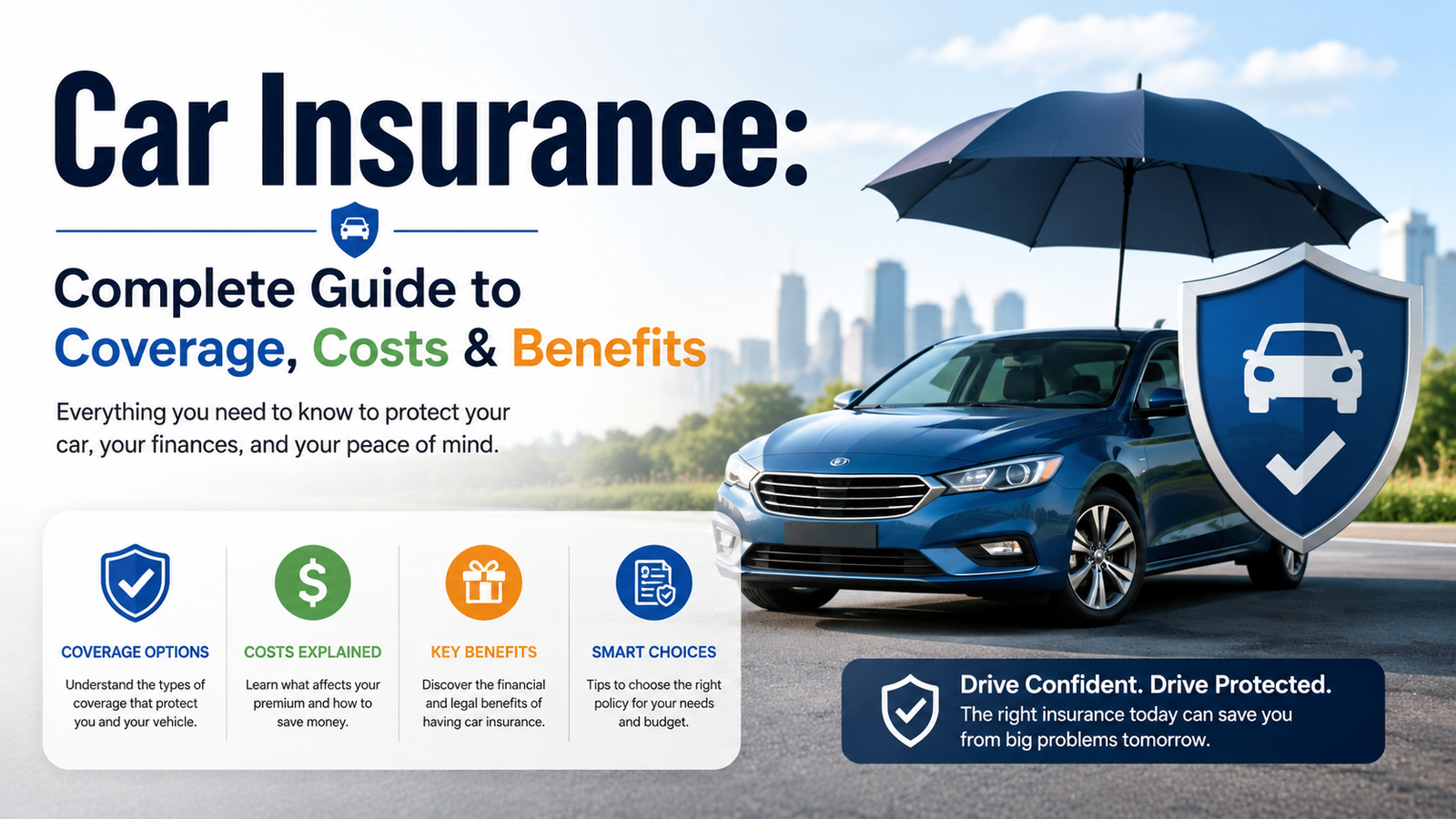
Car Insurance: What to cover, how much it costs and how to save is a topic every car owner should be familiar with if they want to know how to protect themselves financially in the transportation culture of today. Covering up the cost of repairs after a crash or replacing a totaled vehicle is the car insurance side of things, but there are other reasons to get coverage beyond the financial ones, like your legal liabilities if you have an accident that injures or kills someone. In the times where the number of vehicles on road surge high, the need of a good car insurance is getting more and more vital. A single accident can lead to hefty repair bills, medical expenses, and lawsuit. These expenses can be a major financial burden in case you aren’t adequately covered. This knowledge can assist car owners to decide on what proper coverage to purchase that best meets their financial needs while still providing a decent amount of protection.
A car insurance policy is effectively a contract between you and your insurer. For its part, the insurer promises to pay for certain risks and specific amounts as described in the policy. Like this: Car owners can drive with peace of mind and have financial security in case unexpected expenses come their way, rather than being left vulnerable to financial problems.
Understanding the Concept of Car Insurance
Car Insurance starts with knowing the true premise in Insurance Protection. Car insurance is a way for a car owner to make the insurance company bear the financial risk. Instead of bear the burden of potentially bankrupting expenses after an accident or loss, insureds pay a fixed premium in exchange for financial assistance when such events occur.
The business of insurance is based on the principle of risk sharing. A multitude of policyholders pay into one pot of money, which insurance companies then draw on to reimburse for losses that are covered. This approach helps people deal with risk more effectively, while guaranteeing that money is available when they need it.
What is covered, limits, exclusions, and pricing can all vary greatly among auto insurance policies. The level of cover is determined by the particular policy chosen and under the terms and conditions of the insurer. To buy, or not to buy: Knowing these distinctions helps you make informed decisions about when and if to buy additional insurance coverage.
The Importance of Car Insurance Coverage
Car Insurance wouldn’t be complete without discussing reasons why coverage is so important. Driving is dangerous, even a person who has been driving for a long time and is cautious with a high skill level can be in danger. As experienced and prudent as a driver you might be, accidents can also be you are the victim in automobile collisions caused by unpredictable weather conditions, mechanical malfunctions of your or other vehicles on the road.
Uncertainty Insurance provides financial protection against uncertainty. It covers the cost of repairs to the vehicle, medical bills, legal obligations and damages to the property of others in an accident. In many cases, the cost of a crash can be more than what most people can shell out from their own pockets comfortably.
In addition to financial insurance, car insurance helps with stability in society. It guaranteed that they would be compensated for their damage and for their injuries, which diminished the prospect of being dragged out in court or decimated financially. Insurance also drives the economy by making vehicle repairs possible and healing those who are hurt in crashes.
And peace of mind is another big benefit of insurance. Being assured that they have recourse in the event of its occurrence for financial aid to help cover the cost of repairing or replacing their vehicles, makes them worry less about potential financial losses and more about driving safely and responsibly.
Different Types of Car Insurance Coverage
Our presentation on Car Insurance part was a good explanation of the different CAI policies available today. Various types of coverage are tailored to address particular hazards and are differentiated by the degree of coverage offered.
Liability is one of the most basic kinds of car insurance. It shields policyholders from being held financially responsible if they injure someone else or damage someone else’s property in an accident. It is typically legally mandated as a minimum and it’s the core of most of insurance plans.
Collision coverage covers damage to your vehicle if you collide with another vehicle or an object. If you hit another car, a fence, a utility pole or anything else, collision coverage will help cover the cost of repairs or replacement, less your deductible, up to the limits of your policy.
Comprehensive provides coverage for losses that aren’t due to a collision. These scenarios include theft, vandalism, fire, natural disasters, impacts of falling objects, among other unforeseen situations. Comprehensive car insurance has a wider range of cover and it is recommended especially for cars with a high market value.
Medical payment and personal injury protection cover medical expenses related to accidents. These coverages may help with your hospital bills, rehabilitation expenses, and other medical costs.
How Car Insurance Premiums Are Determined
Factors which impact insurance premiums have to be catered for in car Insurance. Insurance providers apply intricate risk models to calculate prices for individual policyholders.
Age is one of the biggest determinants of insurance quotes. Younger drivers are often charged more for car insurance because statistical information shows they have the highest probability of being involved in accidents. When new drivers get experience and drive safely, car insurance rates might go down.
The history of driving is also important in premium estimation. Clean drivers are usually offered the best deal, while those who have been involved in accidents, or have traffic violations on their records, or have been previously claimed upon, on their insurance policies, may find that they have to pay higher premiums, as they are more risky to insure.
Vehicle type and make also has a substantial impact on the cost of insuring it. Luxury cars, high performance vehicles, and cars that are expensive to repair tend to come with larger insurance premiums. In contrast, vehicles that have been linked with safety and dependability may be given better rates.
There is a regional difference in the cost of insurance. Regions with high traffic volumes, higher accident rates, or more frequent vehicle theft are prone to higher premium rates. Regional information is reviewed by the insurance providers to determine the risk and the proper price.
The premium can also be influenced by coverage options, deductibles, and policy limits. Broader coverage will generally translate to higher premiums, while increasing the deductible can help lower month-to-month or annual insurance expenses.
Factors That Influence Car Insurance Costs
Car Insurance needs a closer look at the many factors influencing insurance rates. Policy prices are informed by various facts in the provider’s analysis.
Patterns of vehicle usage are of significance. There are additional risk factors that cause auto premiums to go up for such drivers, including increased chances of accidents due to the long exposure of using vehicles on the road. On the other hand, restricted use of the vehicle would lead to reduced insurance premiums.
Credit history may affect premiums in some areas. Insurers may perceive good financial management as a proxy for responsible behavior and thus be more likely to offer favourable insurance rates. However, the credit-based pricing laws are different in each region.
Some security features and anti-theft devices can reduce the cost. Cars with modern safety features, including collision avoidance systems and security systems, could qualify for a discount on car insurance premiums.
History of claims influences the price of insurance claims too. Having too many claims may indicate higher risk, which causes your premiums to go up. A good claims record usually results in better insurance than a bad one.
Insurance companies are constantly evaluating new patterns, technologies, and industry data to adjust pricing models so they can continue to be financially viable.
Read More : Tesla Model 3 Price in 2026: Complete Guide to Features and Expected Costs
Benefits of Having Car Insurance
Cheap Car Insurance then goes on to list a plethora of advantages to having adequate insurance cover. The best known benefit is financial protection in emergencies.
Insurance helps ease the burden of repair and replacement costs after an accident, or after a covered event. Benefit from the assistance of your insurance provider to cover some of the costs and not pay everything out of your own pocket.
Another big advantage is that you’re covered for the law. In addition, because the minimum amount of insurance must be maintained in order to register a vehicle and use it on the road legally. Insurance lets drivers meet the law’s requirements and avoid penalties and fines as well.
Car insurance also allows for quicker recovery after a car accident. Insurance companies commonly contract out repair work, claims services and pay compensation, enabling policyholders to resume normal life sooner.
Other benefits may be involve roadside assistance, rental coverage for vehicles, legal assistance and emergency services. Such additional benefits increase the overall value provided by the insurance cover and make the customer experience better.
Do not underestimate the emotional security of being insured. You feel good about knowing you can help support them, and when they have a little financial help because of tough times, they can feel better, too.
The Claims Process in Car Insurance
Car Insurance Everything you need to know about Car Insurance claims The claims An insurance claim is a request for payment under your insurance policy but what you probably didn’t realize was the amount of work and processing on there after an incident. The claims process is the real-life use of insurance protection and defines how well policyholders are served.
Insurance companies are notified When an accident or a covered event happens, policyholders usually call their insurance company as soon as they can. Early reporting allows the insurers to promptly initiate investigation and take early assessments.
Insurance adjusters assess the incident and decide if it qualifies for coverage according to the policy. This evaluation might include going over paperwork, looking at damage to the vehicle, and collecting accounts from those involved.
After a claim has been validated, the reimbursement is in line with the policy conditions, the coverage maximums, and the deductibles that are relevant. Depending on the situation, the payment may be sent to the auto repair shop, the medical provider, or the insured.
Claims processing has been made way easier with technology. Several digital reporting products, mobile app, and automated assessment systems to enhance customer experience and expedite claim resolution.
An open and efficient claims process builds a stronger sense of the trust between insurer and policyholder and reaffirms the importance of insurance protection.
Choosing the Right Car Insurance Policy
Why Renters Insurance Is Necessary There are many benefits of renters insurance. The recommended policy is the one that takes into consideration your risk exposures and personal situation, while being the most cost effective in coverage that you can afford.
When shopping for car insurance, vehicle owners should consider their finances, the value of the vehicle, their driving habits, and their coverage requirements. Knowing this, these elements make it possible to find good policies that will not cost an arm and a leg.
One should think twice about coverage limits, because they dictate the most which an underwriter will shell out for covered losses. Not having enough coverage could potentially leave you in financial trouble, but having too much could mean you’re paying too much in premiums.
Policy exclusions and conditions should be meticulously read also. Knowledge of what is and is not covered can prevent disappointment, and help the policyholder to have realistic expectations regarding what benefits may be provided.
The quality of customer service, claims handling, financial stability, and product availability all differ from insurer to insurer. Good research leads to the reputable companies that will establish a strong foundation in financial protection.
Future Trends in Car Insurance
Car Insurance topics are looked at from the current practices and the future of insurance industry trends. Technology is changing the way insurance products are developed and when, where, and how they are sold.
Telematics allows insurers to track driving behavior via connected devices and smartphones. It also enables usage-based insurance programs to offer discounts for safe driving.
Artificial intelligence and machine learning are enhancing risk evaluation, fraud identification, and claims handling. These solutions allow insurers to offer greater personalization and richer customer experiences.
The surge in electric vehicles is shaping insurance considerations since repairs, parts costs, and maintenance schedules vary from those of conventional vehicles. Insurers are adjusting their products to meet the changing needs of the market.
The development of autonomous vehicles could also substantially alter the insurance industry in the future. As more vehicles are automated, liability questions, risk pools, and insurance models will continue to shift.
The digital transformation is improving access too, giving consumers the ability to shop for policies, manage accounts and file claims on convenient online sites.
Conclusion
Car Insurance proves that car insurance is much more than a legal requirement. It is an all-round financial safety net that protects those who own vehicles against multiple risks and uncertainties. From liability coverage and collision insurance to comprehensive packages and the latest in technology, auto insurance is a key part of the transportation system in today’s world.
Consumers will be better informed about their choices when they understand how coverage options work and how premiums are determined and claims processed. Adequate insurance coverage is a source of financial security that has a positive influence on everyday driving.
While the auto and insurance industries continue to transform, staying informed about coverage options, costs and benefits is more important than ever. With the right policies in place and sufficient coverage, vehicle owners can face the road ahead with more confidence, and financial strength.